

HubSpot is a serious CRM with a serious price tag, and whether it earns that price depends entirely on the team buying it. The same product that runs a 50-rep sales org cleanly can swallow a solo founder’s runway. The honest answer to “is it worth it” is “for who?”
HubSpot is worth it for mid-market sales orgs with 15+ reps, marketing-led growth companies and teams on HubSpot Marketing Hub. For solo founders, simple sales processes, service agencies and small businesses, it’s overkill.
Why “Is HubSpot Worth It” Is the Wrong Question
HubSpot is worth it for some teams and a bad fit for others. Both can be true at the same time, which is why generic verdicts don’t help much. Team size, sales process, marketing maturity and budget all change the answer.
The more appropriate question would be “is HubSpot the right solution for me”, and that’s what we’re going to find out next.
What HubSpot Actually Costs in 2026
I’ve watched dozens of B2B teams buy HubSpot. Some regretted it. A handful got real value out of it. The difference came down to whether they understood what they were actually paying for, and most of them didn’t. Most reviews skip the math or quote the entry tier and stop there. That’s where the trap lives.
HubSpot Sales Hub has four tiers in 2026.
Free is $0. You get a contact database, basic deal tracking and a few automation triggers. Two-user cap. It’s a funnel, not a real product, and you’ll outgrow it the week you start.
Starter is $20 per seat per month. Sounds reasonable. Then you go to use the features people actually buy HubSpot for, like automations, sequences, forecasting and deal scoring, and find they’re gated to higher tiers. Starter is a glorified contact list with HubSpot branding on it.
Professional is $100 per seat per month, plus a mandatory $1,500 one-time onboarding fee. The onboarding fee is required, not optional. This is the tier where the real CRM features live. For a 5-person team, year one costs $7,500 in subscription plus $1,500 in onboarding, just under $9,000 before you’ve sent a single deal through it.
Enterprise is $150 per seat per month, plus a $3,500 onboarding fee. Custom objects, predictive scoring, advanced reporting. The same 5-person team would pay $12,500 in year one.
The pattern across the tiers is consistent. The feature you signed up for lives one tier up from the one you can afford. You either pay up or live with the limit.
At Fenixtal I ran cold email for 50+ B2B clients across three years in industries ranging from marketing agencies to dev firms to e-learning companies. Fewer than 20% of them used more than basic CRM features within six months of HubSpot adoption. Most either churned to a simpler tool or kept paying for features that sat dormant in the dashboard.
When HubSpot Is Worth the Cost
There are three specific buyer profiles where HubSpot earns its price. If you’re in one of these, stop reading the rest of this post and go set up a demo.
Mid-market sales orgs with 15+ reps and dedicated RevOps support
If you have 15 sales reps, a sales ops or RevOps person whose job is keeping the CRM clean and a real reporting cadence, HubSpot’s Professional tier is built for you. The deal pipeline reporting, forecasting tools, workflow automations and territory management features all do what they say. The $1,500 onboarding and $100 per seat work out cheap when spread across a team that size and a function that runs every day on the platform.
Marketing-led growth companies running multi-channel campaigns at scale
The reason HubSpot grew was Marketing Hub. If you’re running inbound content, paid ads, email nurture sequences and MQL-to-SQL handoff at real volume, the integration between Marketing Hub and Sales Hub is the strongest version of that workflow on the market. You can argue Salesforce plus Pardot is more powerful at the enterprise tier. Below enterprise, HubSpot wins this category cleanly.
Teams already on HubSpot Marketing Hub who want unified data
If you’re paying for Marketing Hub already, the marginal cost of adding Sales Hub is mostly the seat fee. You get unified contact records, attribution that works end to end and one source of truth across teams. This is the only profile where Sales Hub Starter at $20 per seat might be enough, because the marketing automation already lives next door.
When HubSpot Isn’t Worth the Cost
For most B2B teams under 15 people, HubSpot doesn’t earn its price. The features you’re paying for sit unused. The interface feels like a second job. The upgrade trap pulls you up tiers whether you wanted to go there or not. I’ve written about the complexity problem in more detail elsewhere, but the segmented version starts here.
James Colistra runs Wonderfish, a podcast booking agency in the US. He’s been on HubSpot for years, pays for it and gets real value from it because his agency needs heavy automation for the cold outreach side of his business. He still describes the platform as “a Ferrari, but I sometimes feel like I only need a Honda or a Hyundai,” and says he feels “upsold every time I want to do something.” His direct verdict after years of paying for it was that “not everyone needs HubSpot.”
That’s a HubSpot customer talking, not a competitor or a Reddit anecdote. Someone who pays HubSpot every month and still recommends most of his agency’s clients use something simpler.
These are the four buyer profiles where I tell people to skip HubSpot entirely.
Solo founders and 1-2 person teams
If you’re a solo founder or a two-person operation, HubSpot is engineered for a team you don’t have yet. You’re paying for collaboration features you can’t use, reporting features you don’t need and an onboarding curve that will eat a week of your runway. I broke down the 2-person team math separately here. The short version is that year one runs $3,660 in HubSpot Sales Hub Pro for features a $16 per seat tool covers for the same use case.
Simple sales process companies with low volume, high deal value
If you close 10 deals a year at $50,000 each, your sales process is a phone call, an email thread and a contract. You don’t need lead scoring, multi-touch attribution or automated nurture flows. You need a clean record of who you talked to, what they said and when to follow up next. HubSpot will sell you nine modules to do that. A simple visual pipeline tool does it for a fraction of the cost.
Service businesses juggling multiple client pipelines
If you run an agency, a consultancy or a freelance shop with multiple clients in different stages of work, you need separate pipelines for sales, onboarding, delivery and renewals. HubSpot can do this, but it isn’t built for it. The setup time is real and the team adoption is worse, because the people doing client delivery don’t want to learn a CRM. A flexible visual pipeline tool with unlimited pipelines included is the right shape for this work.
More on the CRM setup small agencies actually use.
Cold email agencies and outbound-led businesses
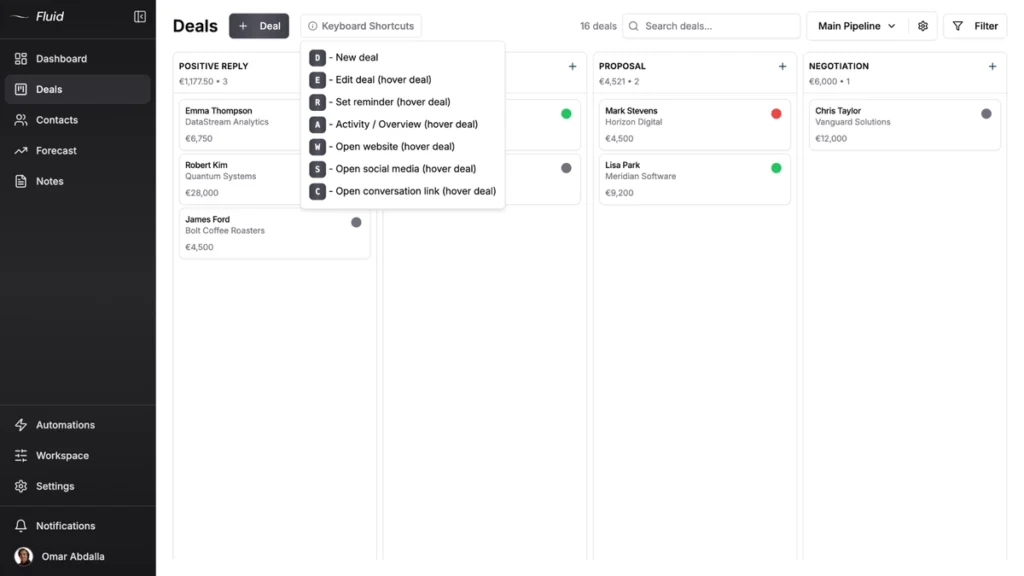
If your lead engine is cold email or cold LinkedIn, your CRM job is simple. Capture replies, organize them by stage, follow up on time and close. You don’t need HubSpot’s inbound marketing tooling because you aren’t running inbound marketing. You need fast deal entry, keyboard shortcuts, reminders and an API that connects to your sending tool. HubSpot’s strength is on the inbound side. For outbound-led teams, you’re paying for the half of the platform you’re not using.
I broke down the right CRM stack for cold email agencies separately.
The HubSpot Controversy Explained
If you’ve searched HubSpot reviews lately, you’ve probably seen mention of “the HubSpot controversy.” It’s worth knowing what’s actually documented.
There are two threads.
The first is the June 2024 customer account incident. HubSpot disclosed that a small number of customer accounts were accessed through credential theft originating outside HubSpot’s own systems. They weren’t the root cause, but the incident raised questions about account security controls and reignited a broader conversation about how much customer data companies trust to one vendor.
The second is a pattern of customer complaints documented across TrustPilot and other public review sites. The complaints fall into two buckets. The first is forced annual contract upgrades that customers say weren’t clearly disclosed at signup. The second is refusal to allow mid-contract cancellation when circumstances change. tldv aggregated these in their review and the volume of similar reports is hard to dismiss as one-off cases.
Neither thread is unique to HubSpot. Every enterprise SaaS company has contract disputes. Every cloud platform has security incidents. But the combination has shaped how a chunk of the market now talks about HubSpot. If you’re considering a multi-year contract, read the terms carefully and budget for the possibility that your needs change before the renewal date.
What to Use Instead if HubSpot Isn’t for You
If you read the segmentation above and landed in the “not worth it” column, you have a few real options. Pipedrive for traditional sales pipelines, Close for outbound and calling, Capsule for simple contact management or Fluid CRM for visual pipeline management without the bloat. I’ve covered the HubSpot alternatives I actually recommend in a separate breakdown.
For the direct side-by-side, see Fluid CRM vs HubSpot and Fluid CRM vs Pipedrive, Fluid CRM vs Close and Fluid CRM vs Capsule.
Nicolas Virtsonis runs marketing and sales pipeline development for cleantech B2B companies. He’s tested Sugar, Zoho, Pipedrive, Salesforce, ActiveCampaign, Vtiger and custom-built systems before landing on Fluid. He says “most CRMs are a nightmare to use and maintain, not this one.”
That’s the segment HubSpot doesn’t compete in. Small teams, founders, consultants and agencies who want a clean pipeline, fast deal entry and follow-up reminders that actually work, without paying for a platform that needs a dedicated admin to keep running.
Frequently Asked Questions
The biggest downsides are cost creep from Starter to Professional, the mandatory $1,500 onboarding fee on paid tiers, customer complaints around forced contract upgrades and a feature set that’s overkill for teams under 15 people. The 2024 customer account incident is also worth weighing for security-conscious buyers.
Salesforce is the #1 CRM by global market share, holding around 20% of the worldwide CRM market according to IDC’s 2025 Worldwide Semiannual Software Tracker. HubSpot is among the fastest-growing major CRM vendors but holds a smaller overall share. “Best” depends on team size and use case. Salesforce wins enterprise. HubSpot wins marketing-led mid-market. Smaller teams are better served by lighter tools.
The controversy refers to two threads. The June 2024 customer account incident that exposed unauthorized access to a small number of accounts, and a documented pattern of customer complaints on TrustPilot about forced contract upgrades and refused mid-contract cancellations. Neither thread is unique to HubSpot, but the combination has shaped market perception.
For mid-market sales orgs with dedicated ops resources, Salesforce. For marketing-led growth companies wanting unified CRM and marketing automation, HubSpot. For everyone else, neither is the right fit. Both are built for organizations with 15+ users and someone whose job is to keep the platform running.
Conclusion
If you’re a mid-market sales team with dedicated ops, HubSpot is probably worth the cost. The platform earns its price at that scale. Fluid CRM is built for the opposite end of the market. Solo founders, small B2B teams, consultants and agencies who want a clean visual pipeline without the bloat get the same core job done at 16% of HubSpot Professional’s cost. Start your 7-day free trial, no credit card required.