
Every guide hands you the same linear 7-step funnel and calls it a sales process. That funnel works for one kind of selling and quietly fails the other. This post shows you both, plus the exact outbound motion I’ve used to book over 1,250 B2B sales calls.
A sales process is the repeatable set of steps you run to turn a lead into a closed deal. It splits in two. Inbound buyers come to you warm and close in one or two calls. Outbound buyers don’t know they need you yet, so they need a longer motion built on steady follow-up.
What a Sales Process Actually Is
A sales process is the set of steps you run, in the same order, to move someone from first contact to signed deal. Lead comes in, you qualify it, you talk, you handle objections, you close or you lose. The order stays the same so you can spot where deals stall and fix that one spot instead of guessing. The talking step has its own guide, a 30-minute discovery call structure with 12 questions.
People mix up a sales process with a sales methodology, and they are not the same thing. The process is the what and the when, the actual stages a deal moves through. A methodology is the how, the selling style you bring to each stage like consultative selling or solution selling. You can run the same five stages with two totally different methodologies. Get the process right first. The style sits on top of it.
Here’s the part the big CRM blogs skip. There isn’t one process that fits every business. The steps change depending on how the lead found you, and that’s where most founders go wrong.
Inbound vs Outbound: Why One Sales Process Doesn’t Work
The single biggest reason a sales process stalls is that you’re running an inbound script on outbound leads, or the reverse. Inbound and outbound bring you two different people at two different stages of wanting what you sell. The same set of steps can’t serve both.
An inbound lead already knows they have a problem. They found your site, read a post, saw a referral and raised their hand. They show up to the call halfway sold. Your job is to confirm fit, answer a few questions and get out of the way. Push too hard and you talk them out of a deal they were ready to make.
An outbound lead is the opposite. You found them. They weren’t looking, they don’t feel the pain yet and they have no reason to trust you. You can’t close that person in one call no matter how good your pitch is. They need time, proof and a reason to care, which means more touches and a follow-up rhythm that inbound never requires.
So when a guide hands you one funnel for everyone, it’s built for inbound and managed sales teams by default. That’s why it falls apart the moment you start doing real outbound. The rest of this post gives you both processes, starting with the short one.
The Inbound Sales Process (1 to 2 Calls)
The inbound sales process is short because the buyer arrives warm. They already raised their hand, so you’re confirming a decision, not creating one. Most inbound deals close in one or two calls, and a higher share of them close than outbound ever will.
Keep it light. Open with a few questions to confirm they’re a fit and to understand what they actually want, then go with the flow of the conversation instead of forcing them down a script. You don’t need a twenty-question discovery grilling here. They told you their problem by booking the call.
From there you either talk it through or walk them through a short deck, depending on what you sell. Show them how you solve the exact thing they came in with, answer the two or three questions they have and ask for the close. If they’re ready, they’ll say yes. If they need one more conversation, you book it before you hang up.
That’s the whole motion. Less work, faster close, higher win rate. The reason it works is the buyer did the hard part before the call ever started. Outbound gives you none of that, which is why it needs real structure.
The Outbound Sales Process, Step by Step
The outbound sales process is the longer motion you run when you found the lead and they weren’t looking for you. It has six steps, and the order matters because each one sets up the next. Skip a step and you feel it three weeks later when a deal you thought was alive goes silent. This is the exact process I ran at Fenixtal to book 1,250+ sales calls and build 12M€+ in pipeline for 50+ clients.
Step 1: Generate traffic and capture leads
Outbound starts with reaching people who don’t know you exist. Cold email outreach, LinkedIn system, calls, paid traffic to a landing page, whatever channel fits your offer and your market. The goal of this step is one thing, getting a positive reply or a booked call from someone who matches your ideal customer.
Pick one or two channels and go deep instead of spreading thin across five. A focused cold email system that books ten meetings a month beats a scattered presence on every platform that books two. If you want the full breakdown of how to fill the top of your pipeline, I covered the whole approach here: pipeline generation strategy (after booking 1,000+ B2B sales meetings).
The output of this step is a steady flow of interested leads. What you do with them next is where most people lose the deal.
Step 2: Store leads and follow up every 2 to 5 days
Once leads start coming in, they need a home and a follow-up rhythm, because outbound deals are won in the follow-up and almost never on the first touch. This is the step where founders bleed the most money, and they rarely notice it happening.
After 1,250+ sales calls I can tell you the pattern is always the same. The leads aren’t the problem. The system holding them is the problem. Most founders either don’t track their leads at all or they run a messy spreadsheet they stop updating by week two. If you’re stuck at this stage, I broke down the options in 10 best sales tracking software for small teams.
Half the agencies I worked with at Fenixtal tracked deals in Google Sheets and the other half paid for Salesforce and never logged in.
Austin Verner runs Cold Emailers, a cold email agency. He told me the reason his clients’ leads died was simple. “Are you sending multiple follow-ups? The answer is no.” The leads were there. The follow-up wasn’t.
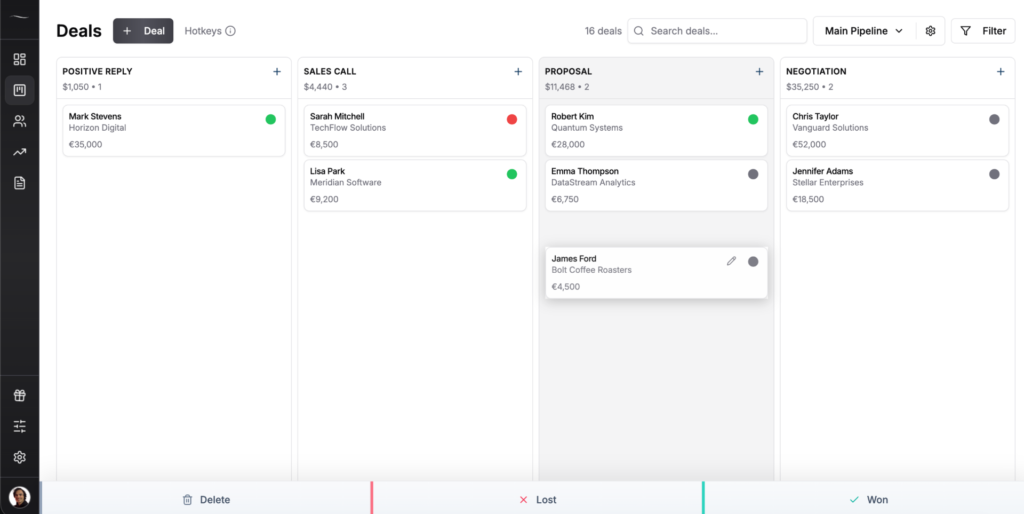
Follow up every two to five days until you get a yes, a no or a booked meeting. Two days for a hot reply, five for a slower one. The aim of every follow-up is the same, book the meeting. This is exactly where Fluid CRM earns its place, and it’s a clear pick if you want the best CRM for small B2B sales pipelines.
Your interested leads land on a visual pipeline, you see who needs a nudge today and the reminders fire so a deal never sits forgotten in row 38 of a sheet. When more than one person sells, see how Fluid CRM works as a CRM for small sales teams.
Step 3: Run call one as a discovery call
Call one in an outbound deal is a discovery call, not a pitch. The buyer barely knows you, so opening a deck and talking at them for thirty minutes is the fastest way to lose them. Your job on this call is to understand their situation and earn enough trust to get a second conversation.
Ask about their current setup, what’s not working and what a fix would be worth to them. Listen more than you talk. You’re qualifying whether they’re a real fit and you’re gathering the exact pains you’ll speak to on call two. Don’t demo yet, even if they ask, because you don’t know enough about their problem to demo well.
End the call by confirming there’s a fit worth exploring and booking call two on the spot. Never let an outbound discovery call end with “I’ll send you some times.” Put the next meeting on the calendar before you hang up.
Step 4: Confirm decision makers and send a recap
Between call one and call two you do two things that quietly decide whether the deal closes. First, confirm who actually makes the decision. If the person on call one can’t sign alone, you need the real buyer on call two or you’re presenting to someone who has to go sell it for you internally.
Second, send a short recap. A few lines by email or a two-minute video that repeats their problem back to them, and if you want a head start you can adapt one of these sales email templates.
This keeps the deal warm across the gap and shows you listened. It costs you five minutes and it cuts no-shows hard.
The recap also gives the decision maker who missed call one a way to get up to speed before they join. That’s the difference between walking into call two cold and walking in ready.
Step 5: Run call two as the demo
Call two is where you present your solution, and it works because you spend it solving the exact problem they handed you on call one. Open by recapping what they told you, so they know this is built around them and not a generic pitch you give everyone.
Then present at a high level. Show how you solve their problem, not every feature you have. As you go, objections will surface, and you want them to. Surface them on purpose by asking “what’s giving you pause?” and handle each one as it comes, one at a time, before you move on. An objection you bury comes back as a stalled deal.
When the objections are clear, close for agreement. Ask for the deal directly. If everything’s been handled well across both calls, this is a short conversation because the selling already happened.
Step 6: Close or schedule the next step
The last step has two outcomes and you plan for both. If they say yes, the work isn’t done. Book the onboarding right away, set clear expectations for what happens next and reassure them they made the right call. Buyer’s remorse is real, and the gap between yes and onboarding is where it creeps in. Close that gap fast.
If it’s not a yes yet, you don’t hang up without the next meeting booked. A deal with no scheduled next step is a dead deal, it just doesn’t know it yet. Put the follow-up call on the calendar before the current call ends, every time. A clean no beats a stalled maybe, because a no frees you to spend that time on a deal that can actually close.
That’s the full outbound motion. Six steps, run in order, with follow-up holding the whole thing together.
Common Sales Process Mistakes to Avoid
Most broken sales processes fail in the same handful of spots, and they’re easy to fix once you can name them. These are the ones I see most after running outbound for 50+ B2B companies.
The first is no follow-up rhythm. Founders touch a lead once, get no reply and move on, when the meeting was two follow-ups away. If you’re not following up every few days until you get a clear answer, you’re handing closed deals to whoever follows up after you.
The second is ending a call without booking the next step. “I’ll send times” turns a warm deal cold over a weekend. The third is treating outbound leads like inbound ones, hitting a cold prospect with a demo on call one before they trust you or even feel the problem. The fourth is the quiet killer, running the whole thing on memory or a spreadsheet you stop updating, so deals slip through the cracks and you blame the leads.
Fix the system holding your leads and most of these mistakes disappear on their own.
Frequently Asked Questions
The classic 7-step version goes prospecting, preparation, approach, presentation, handling objections, closing and follow-up. You’ll see it on nearly every CRM blog. It’s built for inbound leads and managed sales teams, which is exactly why it stalls when you point it at cold outbound prospects who don’t know you yet. For outbound, the steps split differently, with far more weight on follow-up and a two-call close. Match the steps to how the lead found you rather than forcing one funnel on both.
A sales process is the order of stages a deal moves through, like discovery, demo and close. A methodology is the selling style you use inside those stages, like consultative or solution selling. The process is what you do and when. The methodology is how you do it. You build the process first, then choose the style that fits your buyer.
It depends on whether the lead is inbound or outbound. Inbound deals often close in one or two calls because the buyer already wants a fix. Outbound runs longer because you found a cold prospect, so you follow up every two to five days and run a two-call close, discovery first and demo second. The honest answer is your process should take as long as it takes to book and run those calls, with the next meeting always on the calendar so the deal keeps moving instead of stalling.
Every two to five days until you get a yes, a no or a booked meeting. Two days for a hot lead who just replied, closer to five for a slower one. The point of each follow-up is to book the next conversation, not to “check in.” Stop only when you have a clear answer, because a clean no is more useful than a maybe you keep chasing.
Conclusion
There’s no single sales process. There’s an inbound one that closes fast and an outbound one built on relentless follow-up, and most founders lose deals by running the wrong one. If your leads keep dying because follow-ups slip, Fluid CRM gives you a clear visual pipeline and reminders that fire before a deal gets buried.
Start your 7-day free trial, no credit card required.